

Selective Laser Sintering (SLS) 3D printing of metal has emerged as a revolutionary technology in the manufacturing industry. As a supplier of SLS 3D printing metal services, I've witnessed firsthand how this technology is transforming various sectors. In this blog post, I'll explore the industries that are leveraging SLS 3D printing metal and the benefits they're reaping.
Aerospace Industry
The aerospace industry is one of the early adopters and major beneficiaries of SLS 3D printing metal. The demand for lightweight yet strong components is extremely high in this sector. SLS 3D printing allows for the creation of complex geometries that are impossible to achieve with traditional manufacturing methods. For example, engine components can be designed with internal lattice structures to reduce weight without sacrificing strength.
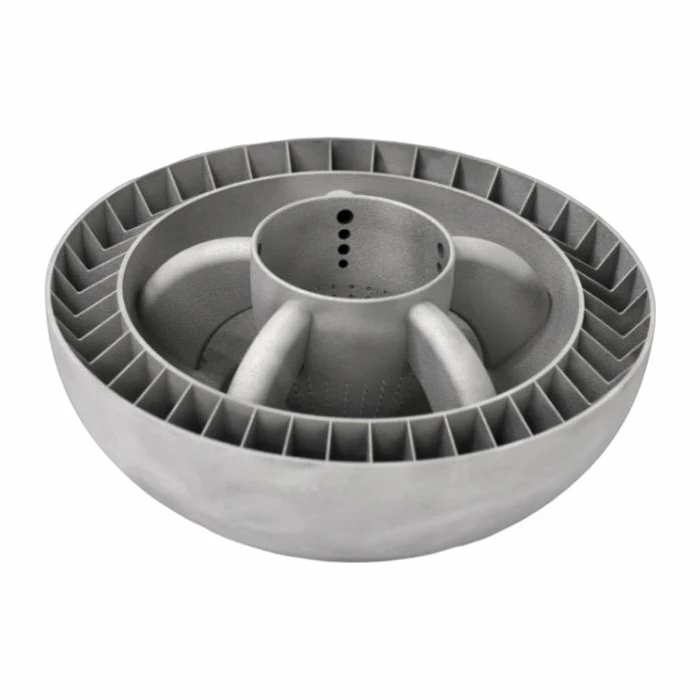
One of the key materials used in aerospace SLS 3D printing is Inconel. Inconel 3D Printed Parts offer excellent high - temperature resistance, corrosion resistance, and mechanical properties. These parts are crucial for applications such as turbine blades, combustion chambers, and structural components in aircraft and spacecraft. By using SLS 3D printing to produce Inconel parts, aerospace companies can reduce production time, lower costs associated with tooling, and achieve better performance.
Another advantage of SLS 3D printing in aerospace is the ability to produce small batches of customized parts. This is particularly useful for prototyping new designs or for producing replacement parts for aging aircraft. Instead of maintaining large inventories of spare parts, airlines and aerospace manufacturers can simply 3D print the required parts on - demand, reducing storage costs and lead times.
Automotive Industry
The automotive industry is also rapidly embracing SLS 3D printing metal technology. In the pursuit of better fuel efficiency, performance, and design flexibility, automotive manufacturers are turning to this technology to produce various components.
For high - performance and racing cars, SLS 3D printing can be used to create lightweight yet strong parts such as engine blocks, pistons, and suspension components. By using advanced metal alloys, these parts can withstand high stress and extreme temperatures. For example, titanium alloys are often used in SLS 3D printing for automotive applications due to their high strength - to - weight ratio.
In addition to performance parts, SLS 3D printing is also used for customizing automotive interiors. Car manufacturers can create unique dashboard elements, steering wheel grips, and other interior components according to customer preferences. This not only enhances the customer experience but also allows for greater brand differentiation in a highly competitive market.
Medical Industry
The medical industry has been transformed by SLS 3D printing metal. One of the most significant applications is in the production of custom - made medical implants. Every patient's anatomy is unique, and SLS 3D printing enables the creation of implants that perfectly match the patient's body structure. For example, titanium is a commonly used material in medical SLS 3D printing due to its biocompatibility, which means it can be safely implanted in the human body without causing adverse reactions.
Dental implants are another area where SLS 3D printing metal shines. With the ability to create precise and customized dental crowns, bridges, and implants, dentists can provide better - fitting and more comfortable solutions for their patients. The high - precision nature of SLS 3D printing ensures that the dental implants match the patient's existing teeth and jaw structure perfectly.
Electronics Industry
In the electronics industry, thermal management is a critical issue. As electronic devices become more powerful and compact, they generate more heat, which can affect their performance and lifespan. 3D Printing Copper Heatsink using SLS technology is an effective solution. Copper has excellent thermal conductivity, and SLS 3D printing allows for the creation of complex heatsink designs with high surface area - to - volume ratios.
These custom - designed heatsinks can be tailored to the specific requirements of different electronic devices, such as smartphones, laptops, and high - performance servers. By efficiently dissipating heat, SLS 3D printed copper heatsinks can improve the reliability and performance of electronic devices.
Jewelry Industry
The jewelry industry has also found value in SLS 3D printing metal. Designers can create intricate and unique jewelry pieces that were previously difficult or impossible to make using traditional methods. Precious metals such as gold, silver, and platinum can be used in SLS 3D printing to produce detailed and personalized jewelry.
This technology allows for rapid prototyping, enabling designers to quickly test and refine their designs. Once the design is finalized, the same SLS 3D printing process can be used to produce the final jewelry piece. This not only reduces the time and cost associated with traditional jewelry - making but also offers customers a wider range of customization options.
Energy Industry
In the energy industry, SLS 3D printing metal is used for various applications, including the production of components for oil and gas exploration, renewable energy systems, and power generation.
For oil and gas, SLS 3D printing can be used to create parts that can withstand harsh environments, such as high - pressure and corrosive conditions. Components such as valves, pumps, and connectors can be produced with high precision and durability using SLS 3D printing.
In the renewable energy sector, particularly in wind and solar power, SLS 3D printing can be used to create custom - designed components. For example, in wind turbines, 3D printed metal parts can be used to optimize the design and performance of the turbine blades and other structural components.
Advantages of SLS 3D Printing Metal for These Industries
- Design Freedom: SLS 3D printing allows for the creation of complex geometries that are not possible with traditional manufacturing methods. This enables industries to design and produce parts with improved functionality and performance.
- Reduced Waste: Unlike traditional subtractive manufacturing processes, SLS 3D printing is an additive process, which means it only uses the amount of material required to build the part. This significantly reduces material waste and associated costs.
- Faster Production: With SLS 3D printing, the production time for parts can be significantly reduced. There is no need for expensive tooling, and parts can be printed directly from digital models, allowing for rapid prototyping and production.
- Customization: Industries can produce customized parts according to specific requirements. This is particularly important in sectors such as medical and automotive, where individual needs vary widely.
Contact for Procurement and Collaboration
If your industry is looking to leverage the benefits of SLS 3D printing metal, I invite you to reach out for a detailed discussion. Whether you need high - performance Inconel parts for aerospace, SLM Aluminum Alloy 3D Printing for automotive applications, or customized medical implants, we have the expertise and technology to meet your needs. Let's explore how SLS 3D printing metal can revolutionize your production processes and drive your business forward.

References
- Gibson, I., Rosen, D. W., & Stucker, B. (2010). Additive Manufacturing Technologies: Rapid Prototyping to Direct Digital Manufacturing. Springer Science & Business Media.
- Wohlers, T., & Gornet, P. (2018). Wohlers Report 2018: 3D Printing and Additive Manufacturing State of the Industry. Wohlers Associates.
- Hopkinson, N., Hague, R., & Dickens, P. M. (2006). Rapid Manufacturing: An Industrial Revolution for the Digital Age. John Wiley & Sons.


