As a trusted supplier of Rotor Housing Robotic Parts, I often get inquiries about the accuracy of these crucial components. In this blog post, I'll delve into what accuracy means in the context of Rotor Housing Robotic Parts, the factors that influence it, and why it matters for your industrial applications.
Understanding Accuracy in Rotor Housing Robotic Parts
Accuracy, in the realm of Rotor Housing Robotic Parts, refers to how closely the actual dimensions and specifications of the part match the intended or design specifications. High - accuracy parts are those that deviate minimally from the ideal measurements. For example, if a design calls for a rotor housing with a specific inner diameter of 100mm and a tolerance of ±0.05mm, a highly accurate part will have an inner diameter within the range of 99.95mm to 100.05mm.
Precision and accuracy are sometimes used interchangeably, but they have distinct meanings. Precision refers to the repeatability of measurements, indicating how closely a set of measurements agree with each other. In contrast, accuracy is about the agreement between the measured value and the true value. In the production of Rotor Housing Robotic Parts, both precision and accuracy are crucial. A part can be precise but inaccurate if it repeatedly deviates from the true value by the same amount.
Factors Influencing the Accuracy of Rotor Housing Robotic Parts
Manufacturing Processes
The choice of manufacturing process plays a significant role in determining the accuracy of Rotor Housing Robotic Parts. At our company, we primarily use sand casting for the production of these parts. Sand casting is a versatile and cost - effective method, but it has its limitations when it comes to accuracy compared to some other advanced manufacturing processes.
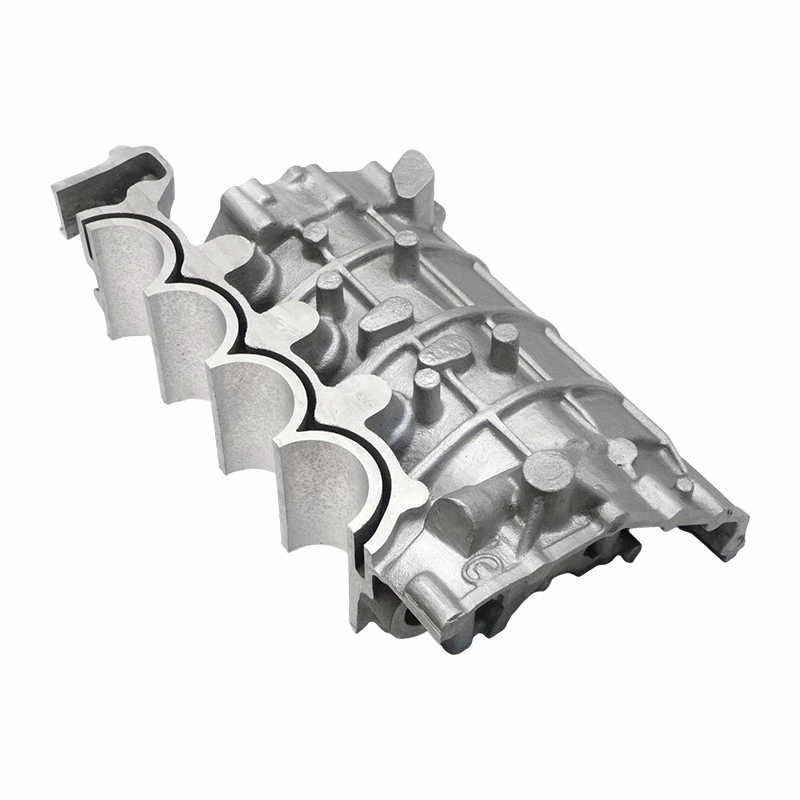
In sand casting, the molten metal is poured into a sand mold. The mold's quality and the properties of the sand can affect the final part's dimensions. For instance, if the sand has inconsistent grain size or porosity, it can lead to uneven cooling of the metal, resulting in dimensional variations. However, with advanced techniques and strict quality control, we are able to achieve a high level of accuracy even with sand casting. You can learn more about our sand - casting process for different parts, such as Sand Casting Engine Block.

Material Properties
The type of material used for Rotor Housing Robotic Parts also impacts accuracy. Different materials have different thermal expansion coefficients, which means they expand and contract at different rates during heating and cooling processes. For example, metals like aluminum and steel have different expansion characteristics. If not accounted for during the manufacturing process, these thermal changes can cause the part to deviate from the desired dimensions.
Moreover, the material's hardness and ductility can affect the machining process. Harder materials may be more difficult to machine precisely, while more ductile materials may deform more easily under cutting forces, both of which can lead to inaccuracies in the final part.
Machining and Finishing Operations
After the initial casting, machining and finishing operations are often required to achieve the final dimensions and surface finish of Rotor Housing Robotic Parts. These operations include milling, turning, and grinding. The accuracy of the machine tools used, as well as the skill of the operators, are critical factors.
Modern CNC (Computer Numerical Control) machines have significantly improved the accuracy of machining operations. These machines are programmed to perform complex operations with high precision, reducing the likelihood of human error. However, the quality of the cutting tools and the calibration of the machines also need to be regularly maintained to ensure consistent accuracy.
Why Accuracy Matters in Rotor Housing Robotic Parts
Performance of Robots
Rotor housing is a key component in robotic systems. It houses the rotor, which is responsible for the rotational movement in many robotic joints. If the rotor housing is not accurate, it can cause misalignment of the rotor. This misalignment can lead to increased friction, vibration, and wear and tear on the components. Over time, these issues can result in reduced performance, decreased efficiency, and even premature failure of the robotic system.
Compatibility with Other Components
In a robotic system, Rotor Housing Robotic Parts need to be compatible with other components, such as motors, gears, and sensors. High accuracy ensures a proper fit and alignment with these other parts. For example, if the housing has inaccurate dimensions, it may not be able to accommodate the motor correctly, leading to poor coupling and inefficient power transmission.
Quality and Reliability Requirements
In industries such as aerospace, automotive, and medical robotics, where safety and performance are of utmost importance, the accuracy of Rotor Housing Robotic Parts is non - negotiable. These industries have strict quality and reliability standards, and any deviation from the specified dimensions can lead to a product being rejected. Using high - accuracy parts helps to meet these standards and ensures the overall quality and reliability of the final product.
Measuring and Ensuring Accuracy in Rotor Housing Robotic Parts
Inspection Techniques
We use a variety of inspection techniques to measure the accuracy of our Rotor Housing Robotic Parts. Coordinate Measuring Machines (CMMs) are one of the most commonly used tools. These machines use a probe to measure the coordinates of points on the part's surface, allowing us to compare the actual dimensions with the design specifications.
Optical measurement systems are also becoming increasingly popular. These systems use lasers or cameras to capture detailed images of the part's surface and analyze its dimensions. They are particularly useful for measuring complex geometries and surface finishes.
Quality Control Processes
Quality control is an integral part of our production process. We have a comprehensive quality control system in place that starts from the raw material inspection and continues throughout the manufacturing process. At each stage, parts are inspected to ensure they meet the required accuracy standards.
We also implement statistical process control (SPC) techniques to monitor and control the manufacturing process. SPC involves collecting and analyzing data from the production process to identify any trends or variations that could lead to inaccuracies. By catching these issues early, we can make adjustments to the process and ensure consistent quality.
Conclusion
The accuracy of Rotor Housing Robotic Parts is a critical factor that directly impacts the performance, compatibility, and quality of robotic systems. As a supplier, we are committed to providing high - accuracy parts through advanced manufacturing processes, careful material selection, and rigorous quality control.
If you are in the market for high - quality Rotor Housing Robotic Parts, we would be more than happy to discuss your requirements and explore how our products can meet your needs. We also supply other related products such as Marine Valve Submarine Valve, which are manufactured with the same commitment to accuracy and quality. Contact us to start a procurement discussion and take your industrial applications to the next level.
References
- ASM Handbook, "casting Processes", ASM International
- Modern Manufacturing Technology textbooks, various authors
- Industry standards and guidelines related to robotic components and casting accuracy