

Can sand - cast cylinder heads be used in aerospace engines?
As a supplier of sand - cast cylinder heads, I've often been asked about the feasibility of using our products in aerospace engines. This is a complex question that requires a deep understanding of both sand casting technology and the stringent requirements of aerospace applications.
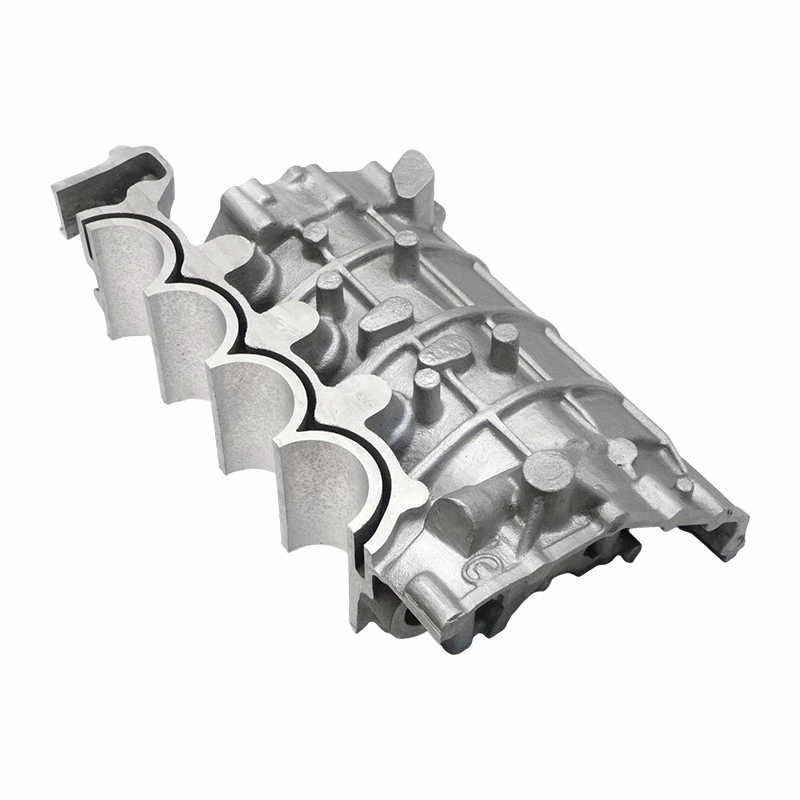

Sand Casting Technology
Sand casting is one of the oldest and most widely used metal casting processes. It involves creating a mold out of sand and pouring molten metal into it to form the desired shape. The process is highly versatile, allowing for the production of parts with complex geometries. For cylinder heads, sand casting can achieve the intricate internal passages for coolant and intake/exhaust gases.
One of the main advantages of sand casting is its cost - effectiveness. The tooling costs for sand casting are relatively low compared to other precision casting methods. This makes it an attractive option for producing parts in medium to large quantities. Additionally, sand casting can be used with a wide range of metals, including aluminum, iron, and steel, which are commonly used in engine components.
However, sand casting also has some limitations. The surface finish of sand - cast parts is generally rougher than that of parts produced by other methods such as investment casting. There is also a higher risk of porosity and other internal defects, which can affect the mechanical properties of the part.
Requirements of Aerospace Engines
Aerospace engines operate in extremely harsh environments. They are subjected to high temperatures, high pressures, and extreme vibrations. The components of an aerospace engine must be lightweight, yet have high strength and fatigue resistance. Any failure in an engine component can have catastrophic consequences, so the reliability and quality of these parts are of utmost importance.
Cylinder heads in aerospace engines play a crucial role in the combustion process. They need to have excellent heat transfer properties to ensure efficient cooling and prevent overheating. The internal passages for the intake and exhaust gases must be precisely shaped to optimize the airflow and combustion efficiency. Moreover, the cylinder heads must be able to withstand the high pressures generated during the combustion process without deforming or cracking.
Feasibility of Using Sand - Cast Cylinder Heads in Aerospace Engines
When considering whether sand - cast cylinder heads can be used in aerospace engines, we need to evaluate the sand - casting process against the requirements of aerospace applications.
Advantages
- Material Selection: As mentioned earlier, sand casting can use a variety of metals. For aerospace applications, aluminum alloys are often preferred due to their high strength - to - weight ratio. Sand - cast aluminum cylinder heads can provide the necessary strength while keeping the weight of the engine down.
- Complex Geometry: The ability of sand casting to produce parts with complex geometries is beneficial for cylinder heads. The intricate coolant passages and valve ports can be easily formed in the sand mold, which is essential for the proper functioning of the engine.
Disadvantages
- Surface Finish and Porosity: The rough surface finish of sand - cast parts may not be suitable for some aerospace applications where smooth surfaces are required for aerodynamics or to prevent the build - up of deposits. Porosity can also reduce the fatigue life and strength of the cylinder head, which is a major concern in aerospace engines.
- Quality Control: Ensuring the consistent quality of sand - cast cylinder heads for aerospace applications is challenging. The high - stress environment of aerospace engines demands a very low defect rate, and it can be difficult to achieve this with the sand - casting process.
Mitigating the Disadvantages
Although sand - cast cylinder heads have some limitations for aerospace applications, there are ways to mitigate these issues.
- Post - Processing: After sand casting, the cylinder heads can undergo various post - processing operations. Machining can be used to improve the surface finish and dimensional accuracy of the part. Heat treatment can also be applied to reduce porosity and improve the mechanical properties of the metal.
- Advanced Quality Control: Implementing advanced quality control techniques such as non - destructive testing (NDT) can help detect internal defects in the sand - cast cylinder heads. Methods like X - ray inspection and ultrasonic testing can identify porosity, cracks, and other flaws before the parts are installed in the engine.
Case Studies
There have been some cases where sand - cast components have been used in aerospace applications. For example, some small - scale aerospace engines or auxiliary systems may use sand - cast parts due to cost - constraints. However, for large - scale commercial and military aerospace engines, the use of sand - cast cylinder heads is still limited.
In some research projects, efforts have been made to develop improved sand - casting techniques for aerospace applications. By using advanced sand mixtures and optimized casting parameters, it has been possible to reduce porosity and improve the quality of sand - cast parts.
Conclusion
In conclusion, while sand - cast cylinder heads have some potential for use in aerospace engines, there are significant challenges that need to be overcome. The cost - effectiveness and ability to produce complex geometries are attractive features, but the issues related to surface finish, porosity, and quality control cannot be ignored.
As a sand - casting cylinder head supplier, we are constantly working on improving our technology and processes. We believe that with further research and development, it may be possible to make sand - cast cylinder heads more suitable for aerospace applications.
If you are interested in our sand - cast cylinder heads or other sand - casting products such as Marine Valve Submarine Valve, Rotor Housing Robotic Parts, and Sand Casting Engine Block, please feel free to contact us for more information and to discuss potential procurement opportunities. We are committed to providing high - quality products and excellent service to meet your needs.
References
- Campbell, J. (2003). Castings. Butterworth - Heinemann.
- Kalpakjian, S., & Schmid, S. R. (2009). Manufacturing Engineering and Technology. Pearson Prentice Hall.
- ASM Handbook Committee. (2008). ASM Handbook, Volume 15: Casting. ASM International.


