

Hey there! As a supplier of 3D Printing Copper Heatsinks, I'm super stoked to dive into the topic of what makes these bad boys so special. Let's start by getting a basic understanding of what a heatsink is. In simple terms, a heatsink is a device that helps dissipate heat from an electronic component. It's like a little cooling hero that keeps your gadgets from overheating and going kaput.
Now, copper is an amazing material for heatsinks. It has high thermal conductivity, which means it can transfer heat really efficiently. This is crucial because the faster the heat can be moved away from the source, the better the performance and longevity of the electronic device. Traditional methods of making copper heatsinks have their limitations, though. They often involve complex machining processes that can be time - consuming and expensive, especially for intricate designs.
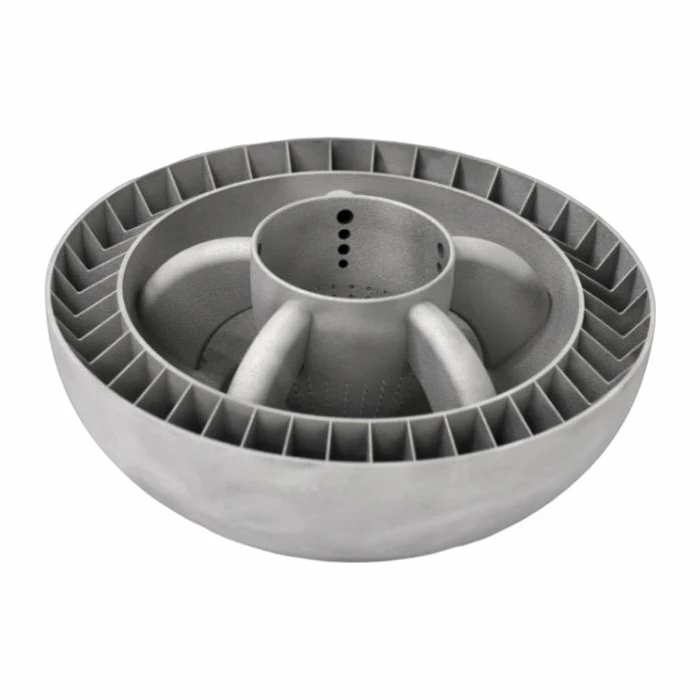
That's where 3D printing comes in. 3D printing copper heatsinks offers a whole new set of advantages. First off, it allows for incredible design freedom. With traditional manufacturing, creating complex geometries can be a real pain in the neck. But with 3D printing, we can fabricate heatsinks with internal channels, fins of all shapes and sizes, and other intricate structures that were previously impossible or extremely difficult to make. These complex designs can significantly enhance the heat dissipation capabilities of the heatsink.
For example, we can design heatsinks with micro - channels inside. These micro - channels can increase the surface area available for heat transfer, allowing the heatsink to cool the electronic component more effectively. The ability to customize the design based on the specific requirements of the application is a game - changer. Whether it's a small, compact heatsink for a mobile device or a large, high - performance one for a server, 3D printing can deliver exactly what's needed.
Another strength of 3D printed copper heatsinks is the reduced production time. Traditional manufacturing processes often involve multiple steps, such as casting, machining, and finishing. Each of these steps takes time, and any changes to the design can mean starting the whole process over again. In contrast, 3D printing is a much more streamlined process. Once the design is finalized, we can start printing right away. This means that we can get the heatsinks to our customers much faster, which is a huge advantage in today's fast - paced market.
Cost - effectiveness is also a major plus. While the initial investment in 3D printing technology might seem high, in the long run, it can save a lot of money. Since 3D printing is an additive manufacturing process, it uses only the amount of material needed to create the heatsink. There's very little waste compared to traditional subtractive manufacturing methods, where a lot of material is cut away and discarded. This not only saves on material costs but also reduces the environmental impact.
Now, let's talk about the quality of 3D printed copper heatsinks. The technology has come a long way, and the quality of the printed parts is really impressive. The copper used in 3D printing has excellent mechanical and thermal properties, similar to those of traditionally manufactured copper. The printed heatsinks are strong, durable, and can withstand the rigors of real - world applications.
One of the key 3D printing techniques we use is SLS 3D Printing Metal. You can learn more about it here. This method uses a laser to selectively fuse the copper powder, layer by layer, to create the final part. It offers high precision and can produce parts with very fine details.
We also have experience with other metal 3D printing services. For example, Inconel 3D Printed Parts are great for applications that require high - temperature resistance and corrosion resistance. And SLM Titanium Alloy Parts are known for their high strength - to - weight ratio, which is useful in aerospace and automotive industries.
When it comes to the performance of 3D printed copper heatsinks, they really shine. In tests, we've found that they can outperform traditional heatsinks in terms of heat dissipation. The complex designs made possible by 3D printing allow for better airflow and more efficient heat transfer. This means that the electronic components can operate at lower temperatures, which improves their performance and reliability.
In addition to the technical advantages, we also offer excellent customer service. We work closely with our customers to understand their specific needs and requirements. Our team of experts is always available to provide advice and support throughout the design and production process. Whether it's helping with the initial design concept or troubleshooting any issues that might arise, we're committed to ensuring that our customers are satisfied.
If you're in the market for high - quality, custom - designed copper heatsinks, we'd love to hear from you. Whether you're an electronics manufacturer, a researcher, or anyone else who needs a reliable cooling solution, we have the expertise and technology to meet your needs. Just reach out to us, and we can start discussing your project. We're confident that our 3D printed copper heatsinks will exceed your expectations in terms of performance, quality, and cost - effectiveness.
References

- "Additive Manufacturing Technologies: 3D Printing, Rapid Prototyping, and Direct Digital Manufacturing" by Ian Gibson, David W. Rosen, and Brent Stucker
- "Metal Additive Manufacturing: A Review" by F. A. Mohamed, A. A. Elwany, and M. A. Khraisheh


