In the world of advanced manufacturing, 3D printing has emerged as a revolutionary technology, offering unparalleled design flexibility and production efficiency. As a leading supplier of 3D Printing Copper Heatsinks, I am often asked about the material utilization rate in this specific application. In this blog post, I will delve into the concept of material utilization rate in 3D printing copper heatsinks, exploring its significance, influencing factors, and how it impacts our business and customers.
Understanding Material Utilization Rate
Material utilization rate refers to the proportion of raw material that is effectively used in the final product during the manufacturing process. In traditional manufacturing methods, such as machining, a significant amount of material is often wasted as chips or scrap. In contrast, 3D printing is an additive manufacturing process, which builds objects layer by layer from a digital model. This inherently allows for a higher material utilization rate as it only adds material where it is needed.
For 3D printing copper heatsinks, the material utilization rate is a crucial metric. Copper is a relatively expensive material, and maximizing its utilization can significantly reduce production costs. Moreover, a high material utilization rate also aligns with the principles of sustainable manufacturing, minimizing waste and environmental impact.
Factors Affecting Material Utilization Rate in 3D Printing Copper Heatsinks
Design Complexity
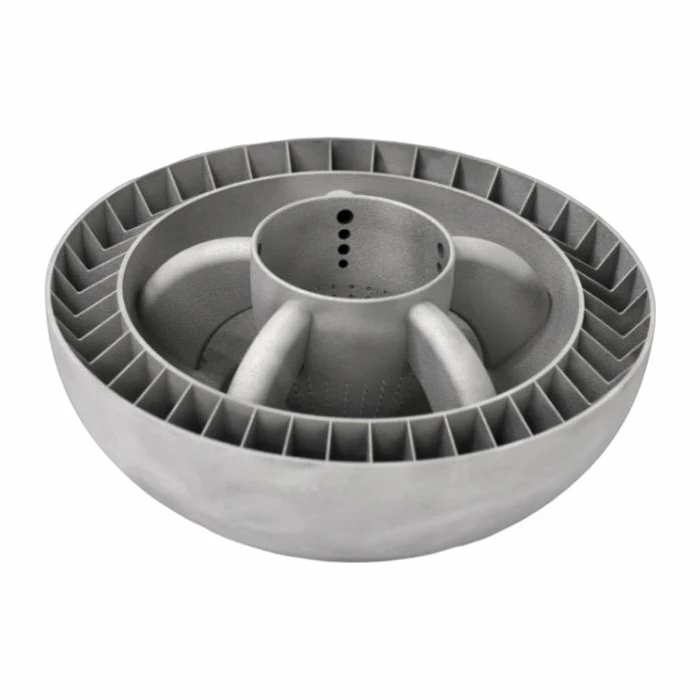
The design of the copper heatsink plays a vital role in determining the material utilization rate. Complex designs with intricate geometries, such as fine fins or internal channels, can be challenging to manufacture using traditional methods. However, 3D printing excels in producing such complex shapes with high precision. By leveraging the design freedom offered by 3D printing, we can optimize the heatsink design to use the minimum amount of copper while still achieving the desired thermal performance. For example, we can design lattice structures within the heatsink, which not only reduce the amount of material used but also enhance heat dissipation through increased surface area.
Printing Process
There are several 3D printing processes available for copper, including Selective Laser Melting (SLM) and Selective Laser Sintering (SLS). Each process has its own characteristics that can affect the material utilization rate.
- SLM: In SLM, a high - power laser selectively melts the copper powder layer by layer to form the final part. This process offers high accuracy and density, resulting in a relatively high material utilization rate. However, the support structures required in SLM can consume additional material. These support structures are necessary to prevent the part from warping or collapsing during the printing process. We need to carefully design and optimize the support structures to minimize their material consumption. You can learn more about SLM Aluminum Alloy 3D Printing to understand the general principles of the SLM process.
- SLS: SLS uses a laser to sinter the copper powder, bonding the particles together without fully melting them. This process typically requires less support material compared to SLM, which can lead to a higher material utilization rate in some cases. However, the mechanical properties of SLS - printed parts may be slightly different from those of SLM - printed parts. For more information on SLS 3D Printing Metal, you can visit the provided link.
Powder Management
Proper powder management is essential for achieving a high material utilization rate in 3D printing copper heatsinks. During the printing process, not all the copper powder is used to form the part. The unused powder can be recycled and reused in subsequent prints. However, the recycling process requires careful handling to ensure the quality of the recycled powder. Contamination or degradation of the powder can affect the print quality and ultimately the material utilization rate. We have established strict powder management procedures to collect, clean, and reuse the copper powder, maximizing its utilization and reducing waste.
Measuring and Improving Material Utilization Rate
Measuring
To measure the material utilization rate in 3D printing copper heatsinks, we calculate the ratio of the mass of the final printed heatsink to the total mass of the copper powder used in the printing process. This ratio provides a clear indication of how efficiently we are using the copper material. We regularly monitor this metric for each production batch to identify any trends or issues that may affect the material utilization rate.
Improving
- Design Optimization: Continuously work with our customers and in - house design team to optimize the heatsink design. We use advanced simulation tools to analyze the thermal performance of different designs and select the one that offers the best balance between performance and material usage.
- Process Optimization: Regularly review and improve our 3D printing processes. This includes optimizing the printing parameters, such as laser power, scanning speed, and layer thickness, to reduce the amount of support material and improve the overall printing efficiency.
- Employee Training: Provide comprehensive training to our employees on proper powder management and printing techniques. Well - trained employees are more likely to operate the 3D printers efficiently, reducing errors and waste.
Impact on Our Business and Customers
For Our Business
A high material utilization rate directly translates into cost savings for our business. By reducing the amount of copper waste, we can lower our production costs and improve our profit margins. Moreover, it allows us to offer more competitive pricing to our customers, which is a significant advantage in the highly competitive market of 3D printing copper heatsinks.
For Our Customers
Customers benefit from our high material utilization rate in several ways. Firstly, they can get high - quality copper heatsinks at a more affordable price. Secondly, our commitment to sustainable manufacturing aligns with the growing environmental awareness of many customers. By choosing our 3D printed copper heatsinks, they are also contributing to a more sustainable future.
Other Related Applications and Considerations
In addition to copper heatsinks, 3D printing is also widely used in manufacturing other metal parts, such as Inconel 3D Printed Parts. The principles of material utilization rate apply similarly to these applications. However, different materials may have different properties and requirements, which need to be taken into account during the design and manufacturing process.
Conclusion
The material utilization rate in 3D printing copper heatsinks is a multi - faceted concept that is influenced by design complexity, printing process, and powder management. By carefully considering these factors and implementing effective strategies to measure and improve the material utilization rate, we can achieve significant cost savings, enhance our competitiveness, and contribute to sustainable manufacturing.

If you are interested in our 3D Printing Copper Heatsinks or have any questions regarding material utilization rate and 3D printing technology, please feel free to contact us for procurement and further discussions. We are committed to providing you with high - quality products and professional services.
References
- Gibson, I., Rosen, D. W., & Stucker, B. (2015). Additive Manufacturing Technologies: 3D Printing, Rapid Prototyping, and Direct Digital Manufacturing. Springer.
- Kruth, J. P., Leu, M. C., & Nakagawa, T. (2007). Progress in additive manufacturing and rapid prototyping. CIRP Annals - Manufacturing Technology, 56(2), 525 - 546.