

Sand casting is a widely used manufacturing process for producing cylinder heads, which are critical components in engines. As a sand casting cylinder head supplier, I've got a good understanding of the chemical composition requirements for these parts. In this blog, I'll break down what makes up a high - quality sand - cast cylinder head and why it matters.
The Basics of Sand - Cast Cylinder Heads
Before getting into the chemical composition, let's briefly talk about sand casting. It's a method where molten metal is poured into a sand mold to form the desired shape of the cylinder head. This process is cost - effective and can produce complex parts with relative ease.
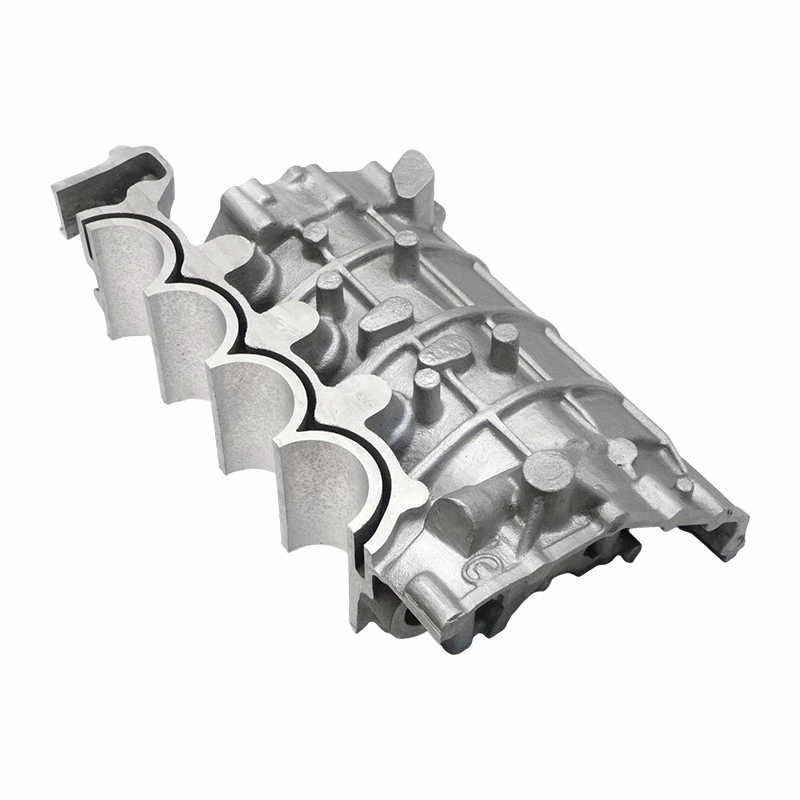
The cylinder head sits on top of the engine block and houses the intake and exhaust valves, spark plugs (in gasoline engines), and the combustion chambers. It plays a vital role in the engine's efficiency, power output, and durability. So, the chemical composition of the cylinder head has to be spot - on for it to perform well.
Key Chemical Elements in Sand - Cast Cylinder Heads
Aluminum
Aluminum is the most common material for sand - cast cylinder heads nowadays. It offers several advantages. First off, it's lightweight. A lighter cylinder head reduces the overall weight of the engine, which in turn can improve fuel efficiency and vehicle handling. For example, modern cars are always striving to cut down on weight to meet stricter fuel economy standards, and an aluminum cylinder head helps a great deal in that regard.
Aluminum also has good thermal conductivity. This means it can effectively dissipate heat away from the combustion chambers. Since engines generate a huge amount of heat during operation, efficient heat dissipation is crucial to prevent overheating and engine damage. In addition, aluminum is corrosion - resistant, which extends the lifespan of the cylinder head.
However, pure aluminum is too soft for use in cylinder heads. So, it's alloyed with other elements to enhance its strength.
Silicon
Silicon is a key alloying element in aluminum - based cylinder heads. It improves the castability of the aluminum alloy. When molten aluminum with the right amount of silicon is poured into the sand mold, it can flow more easily and fill all the intricate details of the cylinder head design. This results in a more accurate and defect - free final product.
Silicon also increases the hardness and wear resistance of the aluminum alloy. The cylinder head experiences a lot of mechanical stress, especially around the valve seats and the areas in contact with the pistons. The added hardness from silicon helps the cylinder head withstand this stress over time.
Copper
Copper is added to further strengthen the aluminum alloy. It forms intermetallic compounds within the alloy structure, which act as reinforcement. This enhances the tensile strength and yield strength of the cylinder head. A stronger cylinder head can handle higher combustion pressures, which is essential for high - performance engines.
Moreover, copper can improve the thermal fatigue resistance of the alloy. In an engine, the cylinder head is exposed to repeated cycles of heating and cooling. This thermal cycling can cause cracks to form over time. The addition of copper helps to minimize the risk of such cracks and maintain the integrity of the cylinder head.

Magnesium
Magnesium is another important alloying element. It aids in the precipitation hardening process of the aluminum alloy. When the alloy is heat - treated, magnesium atoms form fine particles within the aluminum matrix, which significantly increase the hardness and strength of the material.
Magnesium also has a positive effect on the corrosion resistance of the alloy. It forms a protective oxide layer on the surface of the cylinder head, which helps prevent oxidation and other forms of corrosion.
Other Elements and Their Roles
There are also some trace elements that play small but important roles in the chemical composition of sand - cast cylinder heads.
Iron
Iron is present in small amounts, usually as an impurity. While too much iron can be detrimental as it can form brittle intermetallic compounds, a small amount is tolerated. In some cases, controlled amounts of iron can help refine the grain structure of the alloy, which can improve mechanical properties to a certain extent.
Nickel
Nickel is sometimes added to improve the high - temperature strength and corrosion resistance of the alloy. In engines that operate at very high temperatures, such as in some racing or industrial applications, nickel can enhance the performance and durability of the cylinder head.
Importance of Meeting Chemical Composition Requirements
Matching the correct chemical composition is really important. If the amounts of the alloying elements are off, it can spell trouble for the cylinder head. For example, if there's too little silicon, the castability of the alloy might be poor, leading to defects like porosity in the cylinder head. On the other hand, if there's too much copper, the alloy might become too brittle and prone to cracking.
Not meeting the chemical composition requirements can also affect the engine's performance. A cylinder head with inferior mechanical properties might not be able to handle the combustion pressures, resulting in reduced power output and increased fuel consumption. Durability can also be a major issue. A poorly - formulated cylinder head can fail prematurely, leading to costly repairs and downtime for the vehicle or equipment.
Our Sand - Cast Cylinder Head Offerings
As a sand casting cylinder head supplier, we take great care in ensuring that our products meet the strictest chemical composition requirements. We use advanced testing methods to analyze the molten metal during the casting process and make sure that the percentages of each element are just right.
In addition to our high - quality cylinder heads, we also offer other sand - casting parts. Check out our Rotor Housing Robotic Parts and Aerospace Oil Pump for more options. And if you're in the market for an engine block, we've got you covered with our Sand Casting Engine Block.
Contact Us for Procurement
If you're looking for reliable sand - cast cylinder heads or other sand - casting parts, we'd love to hear from you. We're committed to providing top - notch products at competitive prices. Whether you're an automotive manufacturer, an engine repair shop, or an industrial equipment supplier, we can meet your needs. Reach out to us for a quote and let's start a great business relationship.
References
- "Aluminum Alloys: Structure and Properties" by John E. Hatch
- "Casting Processes and Quality Control" by David Croll


