In recent years, the use of Selective Laser Melting (SLM) technology to produce titanium alloy parts has gained significant traction in various industries. As a leading supplier of SLM Titanium Alloy Parts, I have witnessed firsthand the numerous advantages that this innovative manufacturing process offers. In this blog post, I will delve into the key benefits of using SLM technology for titanium alloy part production, highlighting how it can revolutionize your manufacturing operations.
Design Freedom
One of the most significant advantages of SLM technology is the unparalleled design freedom it provides. Traditional manufacturing methods, such as machining and casting, often impose limitations on the complexity and geometry of parts that can be produced. In contrast, SLM allows for the creation of highly intricate and customized designs with internal features, thin walls, and complex geometries that would be impossible or extremely difficult to achieve using conventional techniques.
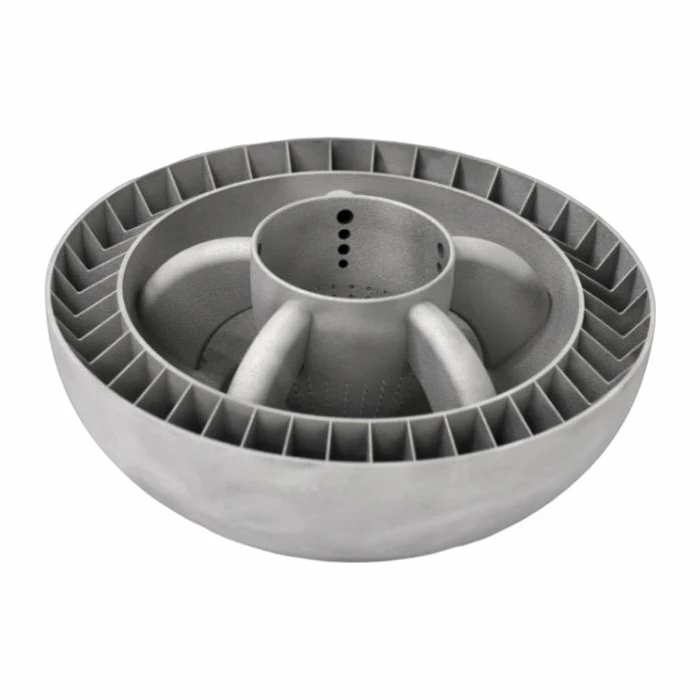

This design freedom enables engineers and designers to optimize part performance by incorporating features such as lattice structures, conformal cooling channels, and lightweight designs. For example, in the aerospace industry, SLM technology has been used to produce complex turbine blades with internal cooling channels that improve efficiency and reduce weight. In the medical field, customized titanium alloy implants can be created to perfectly match a patient's anatomy, improving the success rate of surgeries and patient outcomes.
Material Properties
Titanium alloys are known for their excellent mechanical properties, including high strength-to-weight ratio, corrosion resistance, and biocompatibility. SLM technology allows for the production of titanium alloy parts with superior material properties compared to traditional manufacturing methods.
During the SLM process, a high-powered laser selectively melts and fuses metal powder layer by layer to create a solid part. This process results in a fine-grained microstructure with uniform properties throughout the part, which enhances its mechanical strength and fatigue resistance. Additionally, SLM technology can be used to produce parts with a high density, which further improves their performance and durability.
In addition to their mechanical properties, titanium alloys produced using SLM technology also exhibit excellent corrosion resistance. This makes them ideal for use in harsh environments, such as marine and chemical processing applications. Furthermore, the biocompatibility of titanium alloys makes them suitable for use in medical implants, as they do not cause adverse reactions in the human body.
Reduced Lead Times
Another advantage of using SLM technology to produce titanium alloy parts is the significant reduction in lead times compared to traditional manufacturing methods. Traditional manufacturing processes often involve multiple steps, including tooling design, machining, and assembly, which can take weeks or even months to complete. In contrast, SLM technology allows for the direct production of parts from a digital model, eliminating the need for tooling and reducing the number of manufacturing steps.
This streamlined manufacturing process enables rapid prototyping and production of parts, allowing companies to bring new products to market faster. For example, in the automotive industry, SLM technology has been used to produce custom engine components and lightweight parts in a matter of days, compared to weeks or months using traditional manufacturing methods. This ability to quickly iterate and produce parts can give companies a competitive edge in the market.
Cost-Effectiveness
While the initial investment in SLM technology may be higher than traditional manufacturing methods, the long-term cost savings can be significant. SLM technology reduces material waste by using only the amount of metal powder required to build the part, eliminating the need for extensive machining and scrap material. Additionally, the ability to produce complex parts in a single operation reduces labor costs and the need for multiple manufacturing processes.
Furthermore, the design freedom offered by SLM technology allows for the optimization of part performance, which can lead to reduced operating costs and increased efficiency. For example, in the aerospace industry, lightweight titanium alloy parts produced using SLM technology can reduce fuel consumption and maintenance costs, resulting in significant savings over the life of an aircraft.
Sustainability
In today's environmentally conscious world, sustainability is an important consideration for many companies. SLM technology offers several environmental benefits compared to traditional manufacturing methods. As mentioned earlier, SLM technology reduces material waste by using only the necessary amount of metal powder, which minimizes the environmental impact of the manufacturing process.
Additionally, the ability to produce parts on-demand using SLM technology reduces the need for large inventories and the associated storage and transportation costs. This can help to reduce the carbon footprint of a company's supply chain. Furthermore, the energy efficiency of SLM technology is relatively high compared to traditional manufacturing methods, as it uses a focused laser to melt the metal powder, rather than large amounts of energy to heat and shape the material.
Applications
The advantages of using SLM technology to produce titanium alloy parts have led to its widespread adoption in various industries. Some of the key applications of SLM technology in the production of titanium alloy parts include:
- Aerospace: SLM technology is used to produce complex aerospace components, such as turbine blades, engine parts, and structural components. The design freedom and material properties offered by SLM technology allow for the production of lightweight, high-performance parts that can improve the efficiency and performance of aircraft.
- Medical: Titanium alloys are widely used in the medical industry due to their biocompatibility and excellent mechanical properties. SLM technology allows for the production of customized medical implants, such as hip and knee replacements, dental implants, and spinal implants, which can improve patient outcomes and reduce the risk of complications.
- Automotive: In the automotive industry, SLM technology is used to produce lightweight parts, such as engine components, suspension parts, and body panels. The design freedom and material properties offered by SLM technology allow for the production of parts that are stronger, lighter, and more efficient than traditional parts, which can improve the performance and fuel efficiency of vehicles.
- Defense: SLM technology is used in the defense industry to produce high-performance parts, such as firearm components, missile parts, and armor plating. The design freedom and material properties offered by SLM technology allow for the production of parts that are more durable, reliable, and effective than traditional parts, which can improve the performance and safety of military equipment.
Conclusion
In conclusion, the use of SLM technology to produce titanium alloy parts offers numerous advantages, including design freedom, superior material properties, reduced lead times, cost-effectiveness, sustainability, and a wide range of applications. As a supplier of SLM Titanium Alloy Parts, I am committed to providing our customers with high-quality, innovative solutions that meet their specific needs.
If you are interested in learning more about how SLM technology can benefit your manufacturing operations, or if you have a project that requires the production of titanium alloy parts, I encourage you to contact us. Our team of experts will be happy to discuss your requirements and provide you with a customized solution. Whether you need Inconel 3D Printed Parts or SLS 3D Printing Metal, we have the expertise and capabilities to deliver the parts you need.
References
- Gibson, I., Rosen, D. W., & Stucker, B. (2010). Additive manufacturing technologies: rapid prototyping to direct digital manufacturing. Springer Science & Business Media.
- Kruth, J.-P., Leu, M. C., & Nakagawa, T. (2007). Progress in additive manufacturing and rapid prototyping. CIRP Annals - Manufacturing Technology, 56(2), 525-546.
- Levy, G. N., Schindel, R., & Kruth, J.-P. (2003). Rapid manufacturing and rapid tooling with layer manufacturing (lm) technologies, state of the art and future perspectives. CIRP Annals - Manufacturing Technology, 52(2), 589-609.