

In the realm of manufacturing, sand casting has long been a cornerstone process for producing a wide range of parts. As a seasoned sand casting parts supplier, I've witnessed firsthand the significance of reducing machining allowance in sand casting. Not only does it enhance efficiency and cost - effectiveness, but it also elevates the overall quality of the final products. In this blog, I'll share some practical strategies and insights on how to achieve this goal.
Understanding Machining Allowance in Sand Casting
Before delving into the methods of reducing machining allowance, it's crucial to understand what it is. Machining allowance refers to the extra material left on a sand - cast part during the casting process. This additional material is intended to be removed during subsequent machining operations to achieve the desired dimensions, surface finish, and geometric accuracy. However, excessive machining allowance can lead to several problems. It increases machining time, consumes more cutting tools, and adds to the overall production cost.
Optimizing the Pattern Design
One of the primary ways to reduce machining allowance is through meticulous pattern design. The pattern is a replica of the final part and is used to create the mold cavity in the sand. A well - designed pattern can significantly minimize the amount of extra material required.
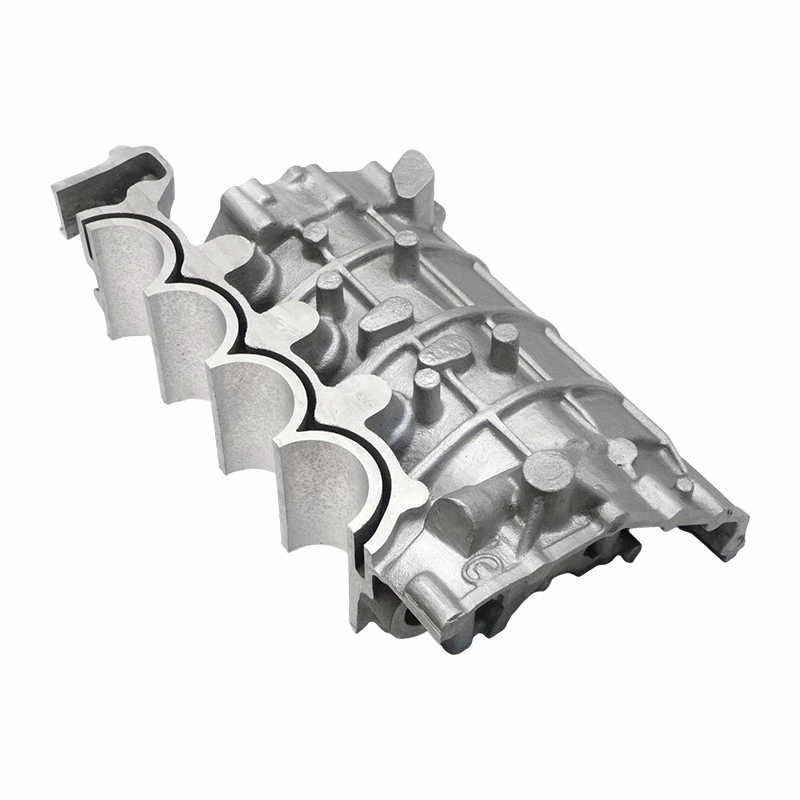
- Precision in Dimensions: When designing the pattern, accurate measurements are of utmost importance. Use advanced 3D modeling software to create patterns with high precision. This ensures that the cast part is as close as possible to the final dimensions, reducing the need for extensive machining. For example, if you're producing a Sand Casting Engine Block, precise pattern design can lead to a block that requires less material removal during machining.
- Draft Angles: Incorporating appropriate draft angles in the pattern design is essential. Draft angles allow the pattern to be easily removed from the sand mold without damaging the mold cavity. By optimizing the draft angles, you can reduce the amount of excess material that is typically added to compensate for potential mold damage during pattern removal.
Controlling the Casting Process
The casting process itself plays a vital role in determining the machining allowance. By carefully controlling various parameters, we can achieve better - quality castings with less extra material.
- Mold Quality: The quality of the sand mold directly affects the surface finish and dimensional accuracy of the cast part. Use high - quality sand with proper grain size and shape. Ensure that the mold is compacted uniformly to prevent any distortion during the casting process. A well - made mold can produce a casting with a smoother surface, reducing the machining allowance needed for surface finishing.
- Pouring Temperature and Speed: The pouring temperature and speed of the molten metal are critical factors. If the pouring temperature is too high, it can cause excessive shrinkage and porosity in the casting, leading to the need for more machining to correct these defects. On the other hand, if the pouring speed is too fast, it can result in turbulence and uneven filling of the mold. By carefully controlling these parameters, we can produce castings with better internal and external quality, thus reducing machining allowance.
Using Advanced Casting Technologies
Advancements in casting technologies offer new opportunities to reduce machining allowance.
- Investment Casting Hybrid with Sand Casting: Combining investment casting techniques with sand casting can be an effective approach. Investment casting is known for its high precision and excellent surface finish. By using investment - casting - like features in the sand - casting process, such as creating thin - walled sections with high accuracy, we can reduce the amount of material that needs to be machined.
- Simulation Software: Utilize casting simulation software to predict the behavior of the molten metal during the casting process. This software can help identify potential defects such as shrinkage, porosity, and uneven cooling. By making adjustments to the casting process based on the simulation results, we can produce castings with fewer defects and lower machining allowance.
Quality Control and Inspection
Implementing a rigorous quality control and inspection system is crucial for reducing machining allowance.
- In - process Inspection: Conduct in - process inspections at various stages of the casting process. This allows us to detect any issues early on and make necessary adjustments. For example, inspecting the mold before pouring can help identify any defects in the mold cavity that could lead to casting defects.
- Final Inspection: After the casting is complete, perform a comprehensive final inspection. Use advanced measurement tools such as coordinate measuring machines (CMMs) to accurately measure the dimensions of the cast part. Compare the measured dimensions with the design specifications. If the casting is within an acceptable tolerance range, less machining will be required.
Case Studies
Let's take a look at some real - world examples of how these strategies have been applied to reduce machining allowance.
- Sand Casting Cylinder Head: In a recent project, we redesigned the pattern of a sand - cast cylinder head. By using 3D modeling software to optimize the dimensions and draft angles, we were able to reduce the machining allowance by 20%. Additionally, by controlling the pouring temperature and speed and using high - quality sand for the mold, we achieved a smoother surface finish, further reducing the need for surface machining.
- Marine Valve Submarine Valve: For a marine valve project, we employed casting simulation software to predict and eliminate potential defects. This allowed us to produce valves with fewer internal defects, resulting in a 15% reduction in machining allowance. The in - process and final inspections also ensured that the cast valves met the strict dimensional requirements, minimizing the amount of material to be removed during machining.
Conclusion
Reducing the machining allowance of sand - cast parts is a multi - faceted challenge that requires a combination of precise pattern design, strict process control, the use of advanced technologies, and thorough quality control. As a sand casting parts supplier, we are committed to continuously improving our processes to provide our customers with high - quality cast parts at a competitive price.
If you're in the market for sand - cast parts and are interested in learning more about how we can reduce machining allowance for your specific needs, we invite you to reach out to us for a detailed discussion. Our team of experts is ready to assist you in finding the best solutions for your casting requirements.

References
- Campbell, J. (2003). Castings. Butterworth - Heinemann.
- Kalpakjian, S., & Schmid, S. R. (2010). Manufacturing Engineering and Technology. Pearson.
- Flemings, M. C. (1974). Solidification Processing. McGraw - Hill.


