

Can SLM Titanium Alloy Parts be used in aerospace engines?
In the dynamic landscape of aerospace engineering, the pursuit of high - performance, lightweight, and reliable components is a never - ending journey. Selective Laser Melting (SLM) technology has emerged as a game - changer in the manufacturing of metal parts, especially titanium alloy parts. As a supplier of SLM Titanium Alloy Parts, I am often asked whether these parts can be used in aerospace engines. In this blog, I will delve into the technical aspects, advantages, challenges, and real - world applications to answer this question.
Technical Characteristics of SLM Titanium Alloy Parts
Titanium alloys are well - known for their excellent properties, such as high strength - to - weight ratio, good corrosion resistance, and high - temperature performance. SLM technology allows for the precise fabrication of complex geometries that are often required in aerospace engines.
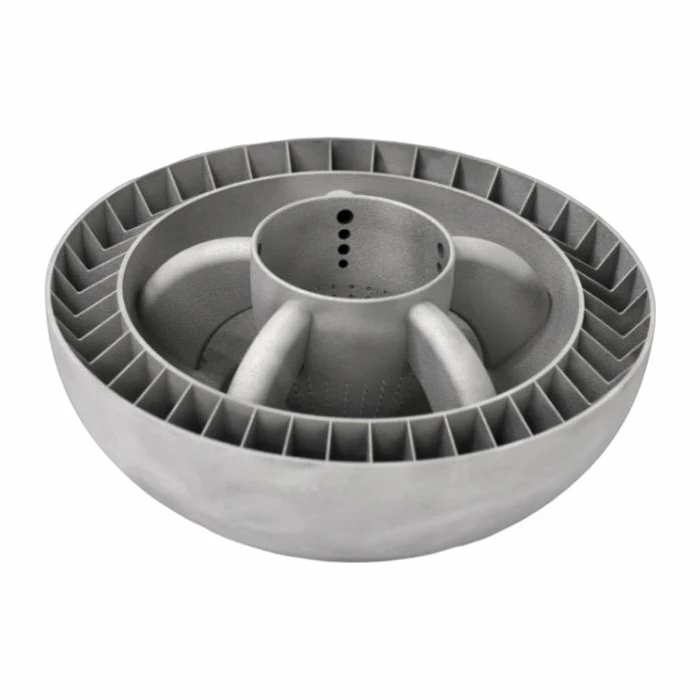
The SLM process involves using a high - power laser to selectively melt and fuse metal powder layer by layer according to a 3D model. This enables the creation of parts with internal lattice structures, thin walls, and intricate cooling channels that are difficult or impossible to achieve with traditional manufacturing methods.
The microstructure of SLM - produced titanium alloy parts is also unique. The rapid cooling rate during the laser melting process results in a fine - grained structure, which can enhance the mechanical properties of the parts. For example, the yield strength and ultimate tensile strength of SLM titanium alloy parts can be comparable to or even higher than those of conventionally manufactured parts.
Advantages of Using SLM Titanium Alloy Parts in Aerospace Engines
-
Weight Reduction
Aerospace engines demand lightweight components to improve fuel efficiency and overall performance. Titanium alloys are inherently lightweight, and the ability of SLM to create optimized geometries further reduces weight. For instance, internal lattice structures can be designed to provide the necessary strength while minimizing material usage. This weight reduction can lead to significant savings in fuel consumption over the lifespan of an aircraft. -
Design Freedom
In aerospace engines, complex geometries are often required for functions such as air flow management, heat transfer, and structural support. SLM technology offers unparalleled design freedom, allowing engineers to create parts with organic shapes and internal features. For example, advanced cooling channels can be integrated into turbine blades to improve their thermal efficiency and durability. -
Reduced Lead Time and Cost
Traditional manufacturing methods for aerospace engine parts, such as casting and machining, can be time - consuming and expensive, especially for small - batch production. SLM technology eliminates the need for expensive tooling and reduces the number of manufacturing steps. This results in shorter lead times and lower costs, making it an attractive option for both prototyping and production. -
Improved Material Utilization
In conventional manufacturing, a large amount of material is often wasted during the machining process. SLM, on the other hand, is an additive manufacturing process that only uses the necessary amount of metal powder. This not only reduces material waste but also makes it more environmentally friendly.
Challenges of Using SLM Titanium Alloy Parts in Aerospace Engines
- Quality Control
Ensuring the quality and consistency of SLM titanium alloy parts is crucial for aerospace applications. The SLM process is sensitive to various factors, such as powder quality, laser parameters, and build environment. Defects such as porosity, cracks, and lack of fusion can occur, which can significantly affect the mechanical properties and reliability of the parts. Therefore, strict quality control measures, including non - destructive testing and post - processing treatments, are required. - Certification and Standards
The aerospace industry has strict certification and standards requirements to ensure the safety and reliability of engine components. SLM technology is relatively new, and there is a lack of comprehensive standards and guidelines specifically for SLM - produced parts. Suppliers need to work closely with aerospace manufacturers and regulatory bodies to develop and validate the necessary certification processes. - High - Temperature Performance
Although titanium alloys have good high - temperature performance, the operating conditions in aerospace engines can be extremely harsh, with temperatures reaching several hundred degrees Celsius. The long - term stability and creep resistance of SLM titanium alloy parts at high temperatures need to be further investigated and optimized.
Real - World Applications
Despite the challenges, there are already some successful applications of SLM titanium alloy parts in aerospace engines. For example, some engine manufacturers have started using SLM - produced brackets, housings, and heat exchangers. These parts have demonstrated good performance in terms of weight reduction, design flexibility, and cost - effectiveness.
In addition, research is ongoing to develop more critical components, such as turbine blades and compressor disks, using SLM technology. With continuous improvement in material properties and manufacturing processes, the use of SLM titanium alloy parts in aerospace engines is expected to increase in the future.
Comparison with Other Materials and Manufacturing Processes
When considering the use of SLM titanium alloy parts in aerospace engines, it is also important to compare them with other materials and manufacturing processes. For example, Inconel 3D Printed Parts are also widely used in high - temperature applications in aerospace engines. Inconel alloys have excellent high - temperature strength and oxidation resistance, but they are heavier than titanium alloys.
Traditional manufacturing methods, such as casting and forging, have a long - established track record in the aerospace industry. However, they are limited in terms of design flexibility and material utilization. On the other hand, 3D Printing Copper Heatsink technology is suitable for applications where high thermal conductivity is required, but copper alloys may not have the same strength and high - temperature performance as titanium alloys.
Conclusion
In conclusion, SLM titanium alloy parts have great potential for use in aerospace engines. Their unique combination of lightweight, design freedom, and cost - effectiveness makes them an attractive option for aerospace manufacturers. However, there are still some challenges that need to be addressed, such as quality control, certification, and high - temperature performance.
As a supplier of SLM titanium alloy parts, we are committed to continuous research and development to improve the quality and performance of our products. We work closely with our customers to understand their specific requirements and provide customized solutions.

If you are interested in exploring the use of SLM titanium alloy parts in your aerospace engine applications, we invite you to contact us for a detailed discussion. Our team of experts is ready to assist you in evaluating the feasibility, design, and manufacturing of these parts.
References
- “Additive Manufacturing Technologies: 3D Printing, Rapid Prototyping, and Direct Digital Manufacturing” by Ian Gibson, David W. Rosen, and Brent Stucker.
- “Titanium Alloys in Aerospace Applications” by F. H. Froes and E. N. May.
- Technical reports and research papers from aerospace industry associations and academic institutions.


