

Hey there, fellow motorcycle enthusiasts! As a supplier of Sand Casting Cylinder Heads, I often get asked whether sand-cast cylinder heads can be used in motorcycle engines. Well, let's dive right into this topic and find out.
First off, let's understand what sand casting is. Sand casting is a manufacturing process where molten metal is poured into a sand mold to create a desired shape. It's a pretty old and well - established method that's been around for ages. The sand molds are typically made by packing sand around a pattern, which is a replica of the part you want to create. Once the molten metal cools and solidifies in the mold, the sand is removed, and you're left with your cast part.
Now, when it comes to motorcycle engines, cylinder heads play a crucial role. They sit on top of the cylinders and house important components like the valves, spark plugs, and sometimes the camshaft. The cylinder head's design and quality can significantly impact the engine's performance, including power output, fuel efficiency, and reliability.
So, can sand - cast cylinder heads be used in motorcycle engines? The short answer is yes, they can. In fact, sand casting has several advantages that make it a viable option for manufacturing motorcycle cylinder heads.
One of the main benefits of sand casting is its versatility. You can create complex shapes and designs with sand casting that might be difficult or expensive to achieve with other manufacturing methods. Motorcycle engines come in all sorts of configurations, from single - cylinder to multi - cylinder setups, and sand casting allows for the production of cylinder heads that are tailored to these different designs. Whether it's a high - performance racing bike or a more standard street motorcycle, sand - cast cylinder heads can be customized to meet the specific requirements of the engine.
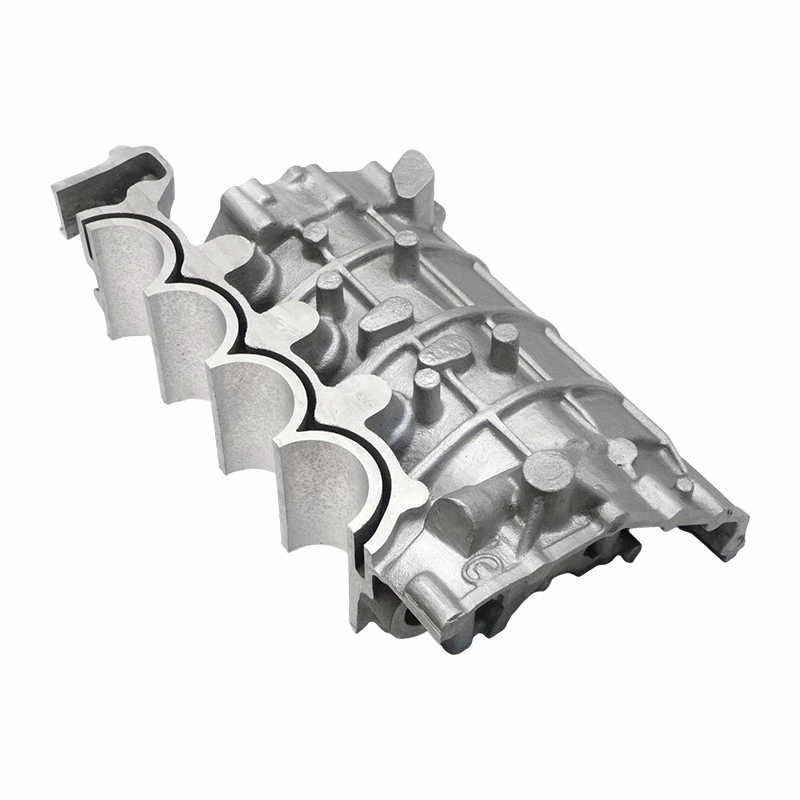

Another advantage is cost - effectiveness. Sand casting is generally more affordable compared to some other precision manufacturing processes. The equipment and materials used in sand casting are relatively inexpensive, and the process can be scaled up or down depending on the production volume. For motorcycle manufacturers, especially those producing mid - range or budget - friendly bikes, using sand - cast cylinder heads can help keep the production costs down without sacrificing too much on quality.
In terms of material properties, sand - cast cylinder heads can offer good strength and durability. The molten metal used in sand casting can be carefully selected to ensure that the resulting cylinder head has the right mechanical properties. For example, aluminum alloys are commonly used in motorcycle cylinder heads because of their lightweight and good heat - dissipating properties. Sand casting allows for the production of aluminum cylinder heads that can withstand the high temperatures and pressures generated inside a motorcycle engine.
However, it's not all sunshine and rainbows. Sand - cast cylinder heads also have some limitations. One potential issue is the surface finish. Sand casting can sometimes result in a rougher surface compared to other manufacturing methods like machining or investment casting. This rough surface might require additional finishing processes, such as grinding or polishing, to achieve the desired smoothness. But hey, with the right post - casting treatments, this can be overcome.
Another concern is the dimensional accuracy. While sand casting can produce parts with reasonable accuracy, it might not be as precise as some other methods. In a high - performance motorcycle engine, where every millimeter matters, slight variations in the dimensions of the cylinder head could potentially affect the engine's performance. But again, modern sand casting techniques and quality control measures have come a long way in minimizing these dimensional errors.
Now, let me tell you a bit about our sand - cast cylinder heads at our company. We've been in the business of manufacturing sand - cast parts for a while, and we take pride in the quality of our products. Our Sand Casting Cylinder Head production process is carefully monitored at every step to ensure that we meet the highest standards. We use high - quality materials and advanced sand casting techniques to produce cylinder heads that are not only strong and durable but also have excellent dimensional accuracy.
In addition to cylinder heads, we also offer other sand - cast parts for motorcycle engines. For example, our Sand Casting Engine Block is designed to provide a solid foundation for the engine, and our Rotor Housing Robotic Parts are engineered to work seamlessly with the engine's other components.
If you're a motorcycle manufacturer or a custom bike builder looking for high - quality sand - cast cylinder heads and other engine parts, we'd love to hear from you. Whether you need a small batch for a prototype or a large - scale production run, we have the capabilities to meet your needs. Our team of experts is always ready to work with you to understand your requirements and provide the best solutions.
In conclusion, sand - cast cylinder heads are a viable option for motorcycle engines. They offer versatility, cost - effectiveness, and good material properties, despite having some minor limitations. With the right manufacturing processes and quality control, sand - cast cylinder heads can perform well in a wide range of motorcycle applications. So, if you're in the market for motorcycle engine parts, don't overlook the potential of sand - cast components.
If you're interested in learning more about our Sand Casting Cylinder Heads or other sand - cast parts, feel free to reach out to us. We're here to help you take your motorcycle engine to the next level.
References
- "Manufacturing Engineering and Technology" by S. Kalpakjian and S. R. Schmid
- "Motorcycle Engine Design and Technology" by various industry experts


