

Hey there! As a supplier of 3D Printing Copper Heatsinks, I've been getting a bunch of questions lately about whether these nifty little components can be used in renewable energy systems. So, I thought I'd sit down and share my thoughts on this topic.
First off, let's talk about what 3D printed copper heatsinks are. 3D printing, also known as additive manufacturing, is a process where objects are created layer by layer from a digital model. When it comes to copper heatsinks, this technology allows for the creation of complex shapes and designs that would be difficult or impossible to achieve with traditional manufacturing methods. Copper is an excellent choice for heatsinks because it has high thermal conductivity, which means it can transfer heat away from a hot component very efficiently.
Now, let's dive into the renewable energy systems. Renewable energy sources like solar, wind, and hydro are becoming increasingly popular as we look for ways to reduce our reliance on fossil fuels. These systems often involve a lot of electronic components that generate heat, such as inverters, batteries, and power converters. And that's where heatsinks come in. They help to keep these components cool, which is crucial for their performance and longevity.
So, can 3D printed copper heatsinks be used in renewable energy systems? The short answer is yes! Here are some of the reasons why:
Customization
One of the biggest advantages of 3D printing is the ability to customize designs. In renewable energy systems, different components may have different cooling requirements. With 3D printed copper heatsinks, we can create designs that are tailored to the specific needs of each component. For example, we can optimize the shape and size of the heatsink to maximize heat transfer and minimize space requirements. This level of customization is difficult to achieve with traditional manufacturing methods, which often rely on standard designs.
Complex Geometries
3D printing allows for the creation of complex geometries that can enhance the performance of heatsinks. For instance, we can design heatsinks with internal channels or fins that increase the surface area available for heat transfer. This can significantly improve the cooling efficiency of the heatsink compared to traditional designs. In renewable energy systems, where space is often limited, these complex geometries can be a game-changer. They allow us to achieve better cooling performance in a smaller footprint.
Lightweight Design
In some renewable energy applications, such as wind turbines and solar panels, weight is a critical factor. 3D printed copper heatsinks can be designed to be lightweight without sacrificing thermal performance. By using advanced design techniques and materials, we can reduce the weight of the heatsink while still maintaining its ability to dissipate heat effectively. This can help to reduce the overall weight of the renewable energy system, which can have a positive impact on its efficiency and cost.
Cost-Effectiveness
While 3D printing technology may seem expensive at first glance, it can actually be cost-effective in the long run. With traditional manufacturing methods, there are often high setup costs associated with creating molds and tooling. These costs can be a significant barrier, especially for small-scale or custom projects. In contrast, 3D printing eliminates the need for molds and tooling, which can reduce the upfront costs. Additionally, 3D printing allows for on-demand production, which means we can produce heatsinks as needed, reducing inventory costs.
Sustainability
Renewable energy systems are all about sustainability, and 3D printed copper heatsinks fit right in. Copper is a recyclable material, which means that at the end of its life, the heatsink can be recycled and used to make new products. Additionally, 3D printing is a relatively clean manufacturing process that produces less waste compared to traditional methods. This makes 3D printed copper heatsinks a more sustainable choice for renewable energy applications.
Now, let's take a look at some specific examples of how 3D printed copper heatsinks can be used in renewable energy systems:
Solar Energy
In solar power systems, inverters are used to convert the direct current (DC) generated by solar panels into alternating current (AC) that can be used in homes and businesses. These inverters generate a significant amount of heat, and proper cooling is essential for their performance. 3D printed copper heatsinks can be used to cool the inverters, ensuring that they operate efficiently and reliably. The customization and complex geometries offered by 3D printing can help to optimize the cooling performance of the heatsinks, even in the harsh environmental conditions often found in solar power installations.
Wind Energy
Wind turbines also have a lot of electronic components that generate heat, such as generators, power converters, and control systems. 3D printed copper heatsinks can be used to cool these components, helping to improve the efficiency and reliability of the wind turbine. The lightweight design of 3D printed heatsinks is particularly beneficial in wind energy applications, as it can reduce the load on the turbine blades and increase the overall energy output.
Energy Storage
Batteries are an important part of many renewable energy systems, as they help to store excess energy generated by solar and wind power. However, batteries can generate a lot of heat during charging and discharging, which can affect their performance and lifespan. 3D printed copper heatsinks can be used to cool the batteries, ensuring that they operate within a safe temperature range. The customization capabilities of 3D printing allow us to design heatsinks that are specifically tailored to the shape and size of the batteries, maximizing the cooling efficiency.
Of course, like any technology, there are also some challenges associated with using 3D printed copper heatsinks in renewable energy systems. One of the main challenges is the cost of the copper material. Copper is a relatively expensive metal, and this can increase the cost of the heatsink. However, as the technology continues to develop and the demand for 3D printed copper heatsinks increases, we expect the cost to come down over time.
Another challenge is the quality control of 3D printed parts. Ensuring that the heatsinks meet the required standards for thermal performance and mechanical strength is crucial. At our company, we have a rigorous quality control process in place to ensure that all of our 3D printed copper heatsinks meet the highest standards. We use advanced testing equipment and techniques to verify the performance of the heatsinks before they are shipped to our customers.
In conclusion, 3D printed copper heatsinks have great potential for use in renewable energy systems. Their customization, complex geometries, lightweight design, cost-effectiveness, and sustainability make them an attractive option for cooling the electronic components in these systems. As the renewable energy industry continues to grow, we believe that 3D printed copper heatsinks will play an increasingly important role in ensuring the efficient and reliable operation of these systems.
If you're interested in learning more about our 3D Printing Copper Heatsink products or have any questions about using them in your renewable energy system, please don't hesitate to reach out to us. We'd be happy to discuss your specific needs and provide you with a customized solution.
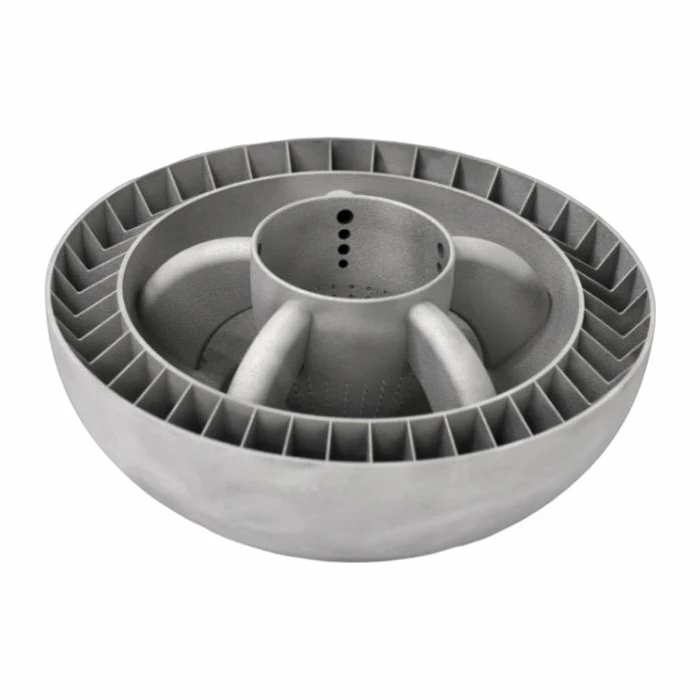

We also offer other metal 3D printing services, such as SLM Aluminum Alloy 3D Printing and Inconel 3D Printed Parts. So, if you have any other metal 3D printing requirements, we've got you covered.
Let's work together to make renewable energy systems more efficient and sustainable with 3D printed copper heatsinks!
References
- Gibson, I., Rosen, D. W., & Stucker, B. (2010). Additive manufacturing technologies: rapid prototyping to direct digital manufacturing. Springer Science & Business Media.
- Chua, C. K., & Leong, K. F. (2014). Understanding rapid prototyping. World Scientific.
- Metals Handbook: Properties and Selection: Nonferrous Alloys and Pure Metals. ASM International.


