

Hey there! As a supplier of 3D printing copper heatsinks, I've been getting a lot of questions lately about whether these bad boys can be used in high - temperature environments. So, I thought I'd sit down and write this blog to share my thoughts and insights on the matter.
First off, let's talk a bit about what 3D printed copper heatsinks are. Using advanced 3D printing technology, we can create heatsinks with complex geometries that were previously impossible or extremely difficult to make using traditional manufacturing methods. Copper is an excellent choice for heatsinks because it has high thermal conductivity, which means it can transfer heat away from a hot component quickly and efficiently.

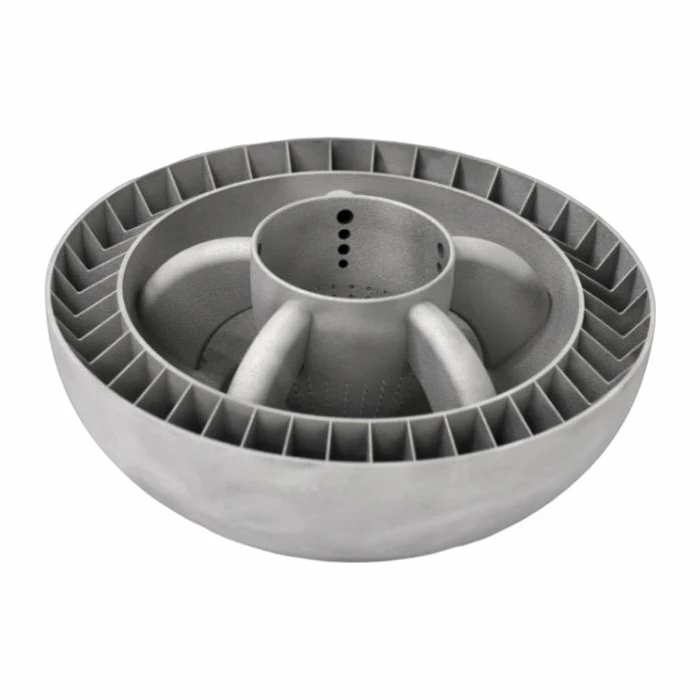
Now, onto the big question: Can 3D printed copper heatsinks be used in high - temperature environments? The short answer is yes, but there are a few things to consider.
Thermal Conductivity and High Temperatures
One of the main reasons copper is used in heatsinks is its outstanding thermal conductivity. At room temperature, copper has a thermal conductivity of around 400 W/(m·K). This high value allows it to absorb heat from a source and dissipate it into the surrounding environment rapidly.
In high - temperature environments, copper's thermal conductivity remains relatively stable. Even as the temperature rises, copper can still transfer heat effectively. However, it's important to note that as the temperature increases, the thermal expansion of copper becomes more significant. This can potentially cause issues if the heatsink is part of a tightly - integrated system where dimensional stability is crucial.
Oxidation and Corrosion
Another factor to consider in high - temperature environments is oxidation. Copper will oxidize when exposed to air at high temperatures. Oxidation can form a layer of copper oxide on the surface of the heatsink, which can reduce its thermal conductivity over time. But don't worry too much! There are ways to mitigate this problem. For example, we can apply a protective coating to the 3D printed copper heatsink. This coating can act as a barrier between the copper and the oxygen in the air, preventing or slowing down the oxidation process.
Mechanical Properties at High Temperatures
The mechanical properties of 3D printed copper heatsinks also change at high temperatures. As the temperature goes up, copper becomes softer and more ductile. This means that it may deform more easily under stress. If the heatsink is subjected to mechanical forces in a high - temperature environment, we need to ensure that its design can withstand these conditions.
One advantage of 3D printing is that we can optimize the design of the heatsink to enhance its mechanical strength. For instance, we can add internal supports or lattice structures to the heatsink during the 3D printing process. These structures can help the heatsink maintain its shape and integrity even at high temperatures.
Comparison with Other Materials
Let's compare 3D printed copper heatsinks with other materials commonly used in high - temperature applications. For example, titanium alloys are known for their excellent high - temperature performance. You can check out SLM Titanium Alloy Parts for more information on titanium alloy parts made using selective laser melting (SLM) technology. Titanium alloys have good strength and corrosion resistance at high temperatures, but their thermal conductivity is much lower than that of copper.
Another option is SLS 3D Printing Metal. Selective laser sintering (SLS) can be used to create metal parts, including heatsinks. Some metals used in SLS, like stainless steel, have decent high - temperature properties. However, similar to titanium alloys, their thermal conductivity is not as high as copper.
Inconel is also a popular material for high - temperature applications. You can learn more about Inconel 3D Printed Parts. Inconel has excellent high - temperature strength and corrosion resistance, but again, its thermal conductivity is lower than copper. So, if heat transfer is the primary concern, 3D printed copper heatsinks have an edge.
Real - World Applications
There are many real - world applications where 3D printed copper heatsinks can be used in high - temperature environments. For example, in the aerospace industry, electronic components on aircraft and satellites often generate a lot of heat. These components need to operate in high - temperature environments, and 3D printed copper heatsinks can help keep them cool.
In the automotive industry, especially in electric vehicles, the battery management systems and power electronics generate heat. As the demand for higher - performance electric vehicles increases, the need for efficient heat dissipation in high - temperature environments becomes more critical. 3D printed copper heatsinks can be customized to fit the specific requirements of these applications.
Our Solutions as a Supplier
As a supplier of 3D printed copper heatsinks, we have a team of experts who can work with you to design and manufacture heatsinks that are suitable for high - temperature environments. We use the latest 3D printing technology and materials to ensure the best performance of our products.
We can perform thermal simulations to predict how the heatsink will perform at different temperatures. This allows us to optimize the design before printing. We also offer various surface treatments to protect the copper from oxidation and corrosion.
If you're in need of 3D printed copper heatsinks for high - temperature applications, don't hesitate to reach out. We're here to help you find the best solution for your specific needs. Whether it's a small - scale project or a large - scale production, we have the capabilities to meet your requirements.
Conclusion
In conclusion, 3D printed copper heatsinks can definitely be used in high - temperature environments. While there are some challenges such as thermal expansion, oxidation, and changes in mechanical properties, these can be addressed through proper design, surface treatments, and material selection.
Compared to other materials, copper's high thermal conductivity gives 3D printed copper heatsinks an advantage in heat transfer applications. With the continuous development of 3D printing technology, we can create more complex and efficient heatsinks to meet the increasing demands of high - temperature environments.
So, if you're looking for a reliable and efficient solution for heat dissipation in high - temperature applications, consider 3D printed copper heatsinks. And if you have any questions or want to discuss a project, feel free to contact us. We're eager to work with you and help you find the perfect heat - dissipation solution.
References
- "Thermal Conductivity of Metals" - A Handbook of Physical Properties
- "High - Temperature Materials and Their Applications" - Academic Journal
- "3D Printing in the Aerospace Industry" - Industry Report


